
 EN
EN



Why On-Site Supplier Evaluation Matters More Than Catalog Samples
A 2013-founded Shenzhen garment manufacturer recently went through a supply chain audit for a European automotive parts distributor. The distributor had initially shortlisted three factories based on website presentations and digital catalogs. All three submitted similar pricing and comparable fabric swatches. Yet during the on-site visit, significant differences emerged. One factory ran twelve automated cutting lines with real-time production tracking; another operated six semi-manual lines with handwritten work orders. The third facility, despite offering the lowest price, kept no organized fabric batch records—meaning repeat order consistency would be impossible to guarantee.
The Gap Between Digital Presentations and Actual Production Quality
Every uniform supplier presents polished digital catalogs, often using the same stock photography circulated across Alibaba and industry trade platforms. A 2025 survey by a garment sourcing consultancy found that 62% of first-time buyers rated initial supplier samples as "meeting expectations," yet only 41% rated the actual bulk delivery the same way. The gap stems from sample optimization—a manufacturer might produce three perfect pre-production samples using their most experienced tailor and highest-grade fabric reserved specifically for sampling, then shift to standard-grade materials and junior seamstresses for production runs.
Closing this gap requires verifying three aspects before placing a bulk order. First, request a production-floor sample rather than a showroom sample. A production-floor sample comes directly from the active manufacturing line using the same fabric rolls, sewing stations, and workers that will fulfill the actual order. Second, ask for batch-level quality control records from the most recent 3–5 orders similar to yours in fabric type and quantity. Third, confirm that the uniform supplier maintains separate sample-approval and production-quality inspection teams rather than having the same person handle both functions. Segregation of duties reduces the incentive to pass borderline quality.
What a Factory Walkthrough Reveals About Production Capability
A factory walkthrough should focus on three zones: fabric storage, cutting and sewing lines, and finished-goods quality control. In fabric storage, temperature and humidity control matter. Cotton and cotton-blend fabrics stored in uncontrolled humidity above 65% RH can develop mildew that weakens fiber tensile strength by 15–20% before any visible signs appear. A professional uniform supplier maintains climate-controlled fabric warehouses at 20–25°C and 45–55% relative humidity, often with logged environmental monitoring.
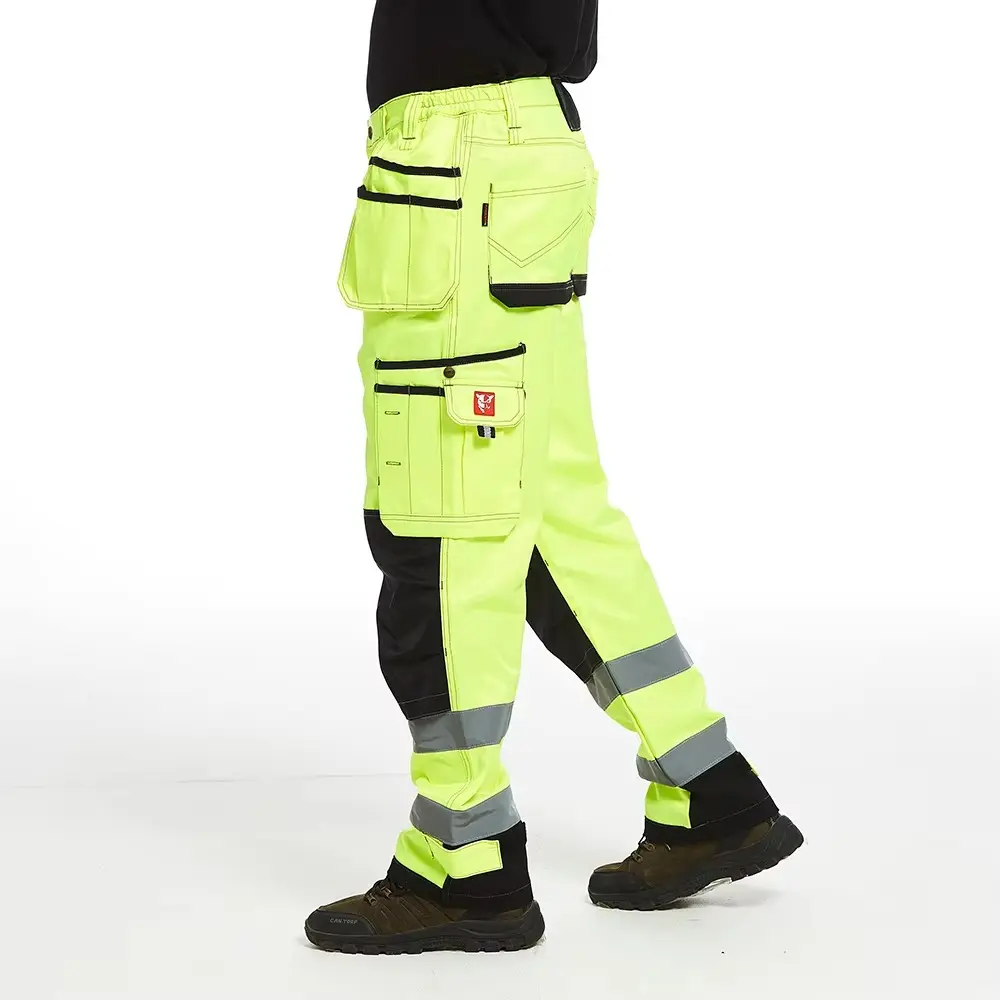
On the cutting and sewing floor, count the ratio of specialized machines to general-purpose lockstitch machines. A supplier handling industrial workwear should operate at least one bartack machine per six lockstitch stations for reinforced pocket corners, belt loops, and stress points. The absence of dedicated bartack or chainstitch machines signals that the factory primarily handles fashion garments, not load-bearing workwear. Check whether the quality control station operates under adequate lighting—a minimum of 750 lux as recommended by ISO 8995 for textile inspection—and whether inspectors use standardized defect classification cards rather than personal judgment.
Real-World Case: How Sample Testing Caught a Uniform Supplier's Fabric Issue
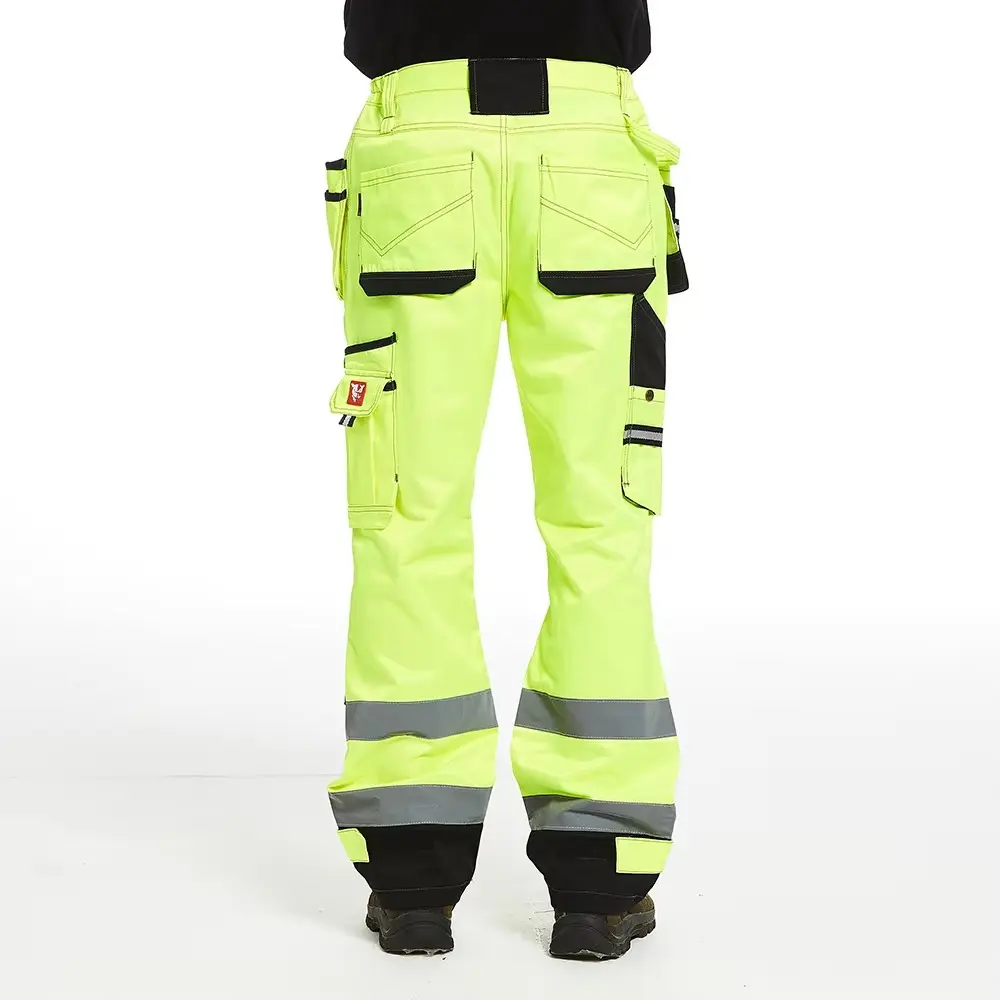
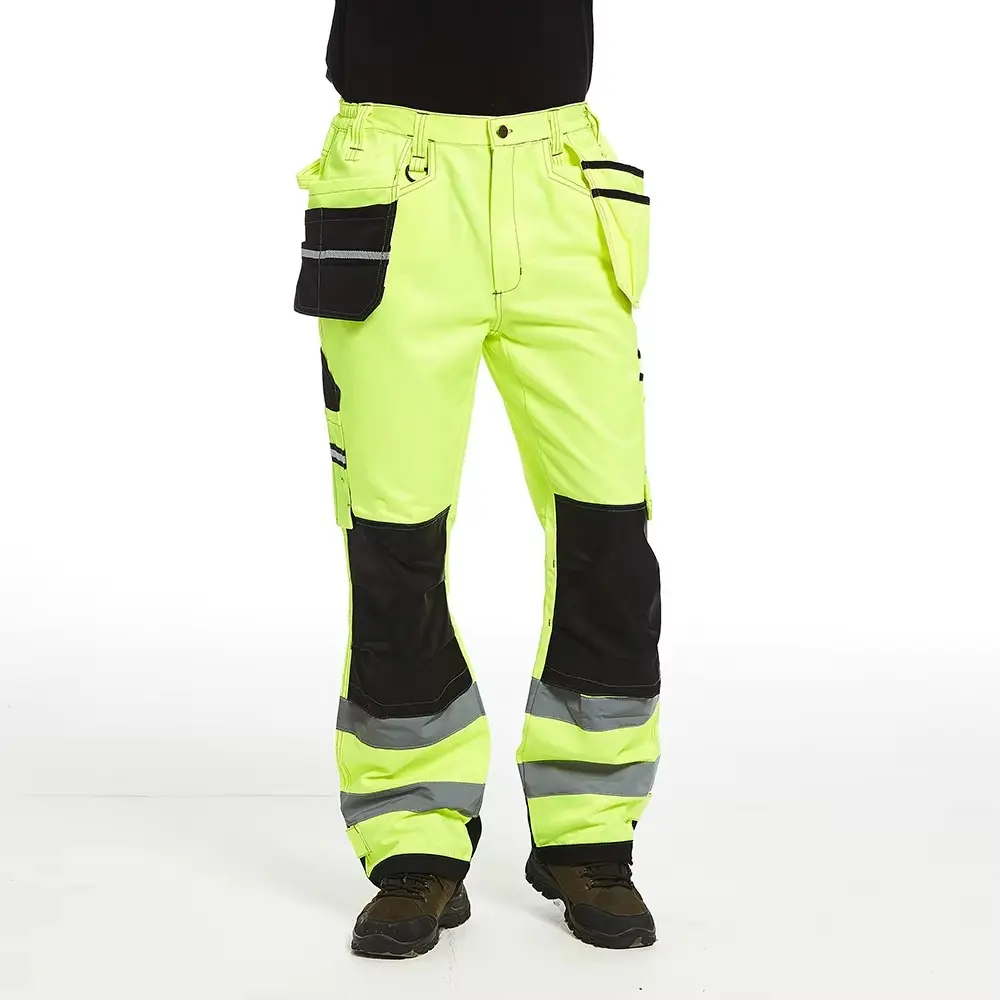
A construction company procurement team ordered 1,200 pairs of cargo work trousers with reinforced knees. The pre-production sample looked excellent—clean stitching, sturdy fabric, proper pocket alignment. The team then requested a second sample but specified that this one must be washed through five industrial laundry cycles following ISO 6330 procedures before inspection. After five washes at 60°C, the supposedly "pre-shrunk" fabric had shrunk 8.3% in length and 4.1% in width. The knee reinforcement panels, originally perfectly aligned, now sat two inches above the actual knee position.
The root cause traced to the uniform supplier using fabric that had undergone only mechanical compacting rather than full sanforization. Mechanical compacting reduces residual shrinkage to approximately 3–4%, while sanforization brings it below 1%. The additional wash-test requirement saved the buyer from receiving 1,200 pairs of functionally defective work trousers. The corrected production run used sanforized fabric and delivered shrinkage rates under 0.8%.
Technical Quality Verification Methods for Professional Buyers
Understanding AQL Inspection Standards for Garment Orders
AQL stands for Acceptable Quality Level, defined under ISO 2859-1 (equivalent to ANSI/ASQ Z1.4). For garment orders, the standard AQL levels are: AQL 2.5 for general appearance (fabric defects, color variation, printing errors), AQL 4.0 for measurements (sleeve length, chest width, inseam tolerance), and AQL 0 (zero-defect) for critical safety features such as reflective tape placement on high-visibility uniforms.
The inspection process works through random sampling. For a batch of 1,200 units, AQL 2.5 Level II sampling requires inspecting 80 randomly selected pieces. If seven or fewer pieces show major defects, the batch passes. At eight defects, the batch fails, and the buyer can reject the entire order or require 100% re-inspection at the supplier's expense. Any uniform supplier adhering to AQL protocols provides inspection reports listing each defect by classification, location, and photo evidence.
Fabric Testing Protocols Beyond Visual Inspection
Visual inspection alone cannot detect all fabric quality issues. Three laboratory tests provide objective data. A Martindale abrasion test according to ISO 12947-2 rubs fabric against a standard abrasive under controlled pressure, recording the number of cycles before thread breakage or unacceptable pilling. Workwear fabrics should exceed 30,000 cycles for acceptable durability. A tensile strength test per ISO 13934-1 measures the force in Newtons required to tear a fabric strip, with industrial workwear requiring at least 400N in the warp direction.
Colorfastness testing evaluates resistance to laundering, perspiration, and light exposure. ISO 105-C06 tests wash fastness by laundering fabric swatches at specified temperatures with standard detergent and multifiber adjacent fabric, then measuring color transfer onto the adjacent strips using a grey scale from 1 (severe staining) to 5 (no staining). A professional uniform supplier maintains in-house colorfastness testing equipment or provides third-party lab certificates for each fabric batch.
How to Verify Stitching Quality and Seam Strength
Stitch-per-inch (SPI) count provides a fast quality indicator. Lockstitch seams on workwear should run 8–12 SPI. Below 8 SPI, the seam gaps allow fabric edges to fray and threads to snap under tension. Above 12 SPI, excessive needle penetration weakens the fabric along the seam line. Seam strength testing per ISO 13935-2 clamps a sewn fabric sample in a tensile tester and records the force at which the seam breaks. For cargo pants and work jackets, seam strength should exceed 200N in the seat and knee areas.
Bar-tack reinforcement on pocket corners, zipper ends, and belt loops deserves separate inspection. A bar-tack machine creates approximately 28–42 zigzag stitches in a tight pattern covering 3–5mm. Pull-testing bar-tacked points manually by applying approximately 5kg of force for five seconds reveals whether the reinforcement actually strengthens or merely decorates the seam. Quality-conscious uniform suppliers apply bar-tacks as structural reinforcement rather than cosmetic stitches.
Building a Long-Term Supplier Relationship Through Structured Quality Checks
The Role of Production Record Archives in Repeat Order Consistency
Custom workwear is rarely a one-time purchase. Teams grow, uniforms wear out, and reorders follow. Yet repeat orders often arrive subtly different from the first batch because fabric dye lots vary, thread suppliers change, and machine calibrations drift. A structured uniform supplier maintains production records for each client, archiving fabric mill certificates, dye lot numbers, thread specifications, pattern templates, embroidery digitization files, and inspection reports.
When evaluating potential suppliers, ask to see archived production records from orders completed 12–18 months ago. A supplier that can instantly retrieve a 2024 order's fabric specification and replicate it in 2026 demonstrates the record-keeping discipline required for consistent repeat production. Suppliers that cannot locate historical orders within 24 hours likely lack the documentation infrastructure to maintain quality across multiple production cycles.
How ISO-Certified Audit Processes Protect Bulk Uniform Orders
ISO 9001 certification provides a baseline quality management framework, but the certification depth matters. Stage-two audit reports detail specific findings, corrective actions, and verification timelines. Request the supplier's most recent ISO 9001 surveillance audit report rather than just the certificate. A supplier whose last audit identified non-conformities with documented corrective actions demonstrates a functioning quality management system. A supplier with zero findings across three consecutive audits more likely received a superficial review.
For uniform orders involving safety compliance, verify whether the supplier holds ISO 45001 occupational health and safety certification. A factory floor running 130+ skilled workers across 12 production lines should demonstrate documented hazard identification, risk assessment protocols, and worker safety training records. These operational indicators correlate strongly with production consistency because disciplined safety management requires the same attention to process detail as disciplined quality management.
Frequently Asked Questions
What is the most important quality indicator when choosing a uniform supplier?
Production-floor sample verification combined with independent wash testing provides the most reliable quality indicator. A pre-production sample washed through five industrial cycles reveals shrinkage, color fastness, and seam integrity issues that catalog photos and fresh samples conceal. This single test catches approximately 70% of common quality failures.
How does AQL inspection work for uniform orders?
AQL inspection uses random statistical sampling per ISO 2859-1. For a 1,200-piece order at AQL 2.5, inspectors examine 80 randomly selected units. Major defects exceeding a threshold count trigger batch rejection. Critical safety defects follow AQL 0, meaning a single failure rejects the entire batch regardless of sample size.
What should a factory walkthrough focus on?
Focus on climate-controlled fabric storage, specialized machine ratios (bartack per lockstitch), quality control lighting at 750 lux minimum, and whether inspectors use standardized defect cards. The presence or absence of these four indicators reliably predicts production capability without requiring textile engineering expertise.
Can fabric quality be verified without a laboratory?
Basic field tests include the hand-rub test for color transfer (rub white cotton cloth against the fabric for 30 seconds under firm pressure), the light-transmission test for weave density (hold fabric against a window—visible grid patterns indicate loose weave), and the burn test for fiber content (cotton burns to ash; polyester melts into a hard bead).
How often should uniform suppliers undergo factory audits?
Initial on-site audit before first order, followed by annual surveillance audits for ongoing relationships. Suppliers producing safety-critical uniforms should undergo audit every six months. ISO 9001 certification supplements but does not replace buyer-conducted audits because certification bodies may not inspect production lines running the buyer's specific fabric and design requirements.
What records should a quality-focused uniform supplier maintain?
A professional supplier archives fabric mill certificates, dye lot tracking, thread specifications, pattern templates, embroidery digitization files, per-batch inspection reports, and pre-production sample approval records. The ability to retrieve a two-year-old order's complete production record within 24 hours distinguishes systematic suppliers from opportunistic manufacturers.