
 EN
EN



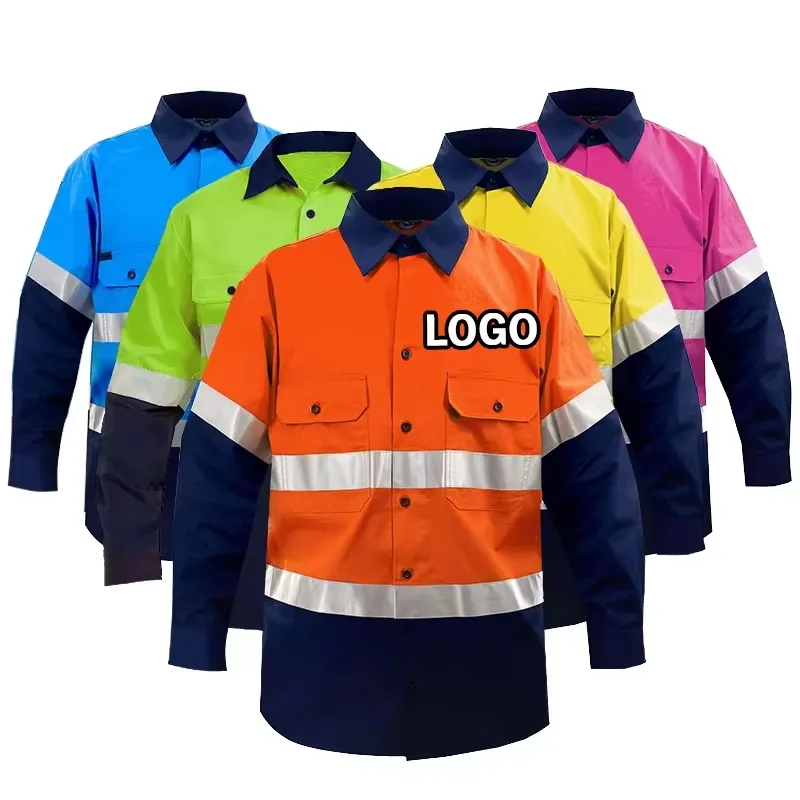
Safety Compliance as the Primary Driver for Factory Uniform Programs
Manufacturing plants operate some of the most hazard-dense work environments in any industry. Rotating machinery, overhead loads, chemical exposure, temperature extremes, and repetitive motion stress converge on a single factory floor. The U.S. Bureau of Labor Statistics recorded 395,300 nonfatal manufacturing injuries and illnesses in 2023, with contact with objects and equipment accounting for 38% of cases. Properly specified industrial workwear directly addresses these statistical risks.
How Industrial Workwear Reduces Common Manufacturing Floor Injuries
Cut-resistant sleeves and jackets using high-performance polyethylene (HPPE) or para-aramid fibers protect workers handling sheet metal, glass panels, and machined components with sharp edges. The protection mechanism differs by material: HPPE fibers stretch under blade pressure, wrapping around the cutting edge and distributing force across a wider surface area, while para-aramid fibers maintain rigidity and deflect the blade through high tensile strength at 3,620 MPa. For sheet metal stamping operations where workers handle burred steel blanks, cut-resistant industrial workwear rated at ANSI/ISEA 105 Level A4 or A5 provides protection against cuts up to 2,200 grams of force.
Heat-resistant workwear addresses thermal hazards differently. In die-casting and forging plants, molten metal splash protection requires fabrics treated with flame-retardant chemicals or inherently flame-resistant fibers like modacrylic blends. The critical distinction lies in the protection duration: treated cotton workwear loses flame resistance after approximately 50 industrial wash cycles if improperly laundered, while inherent FR fibers maintain protection throughout the garment's service life. NFPA 2112 certification verifies that the fabric self-extinguishes within two seconds after flame exposure and produces char length under four inches—measurements that directly correlate to reduced burn severity in real accident scenarios.
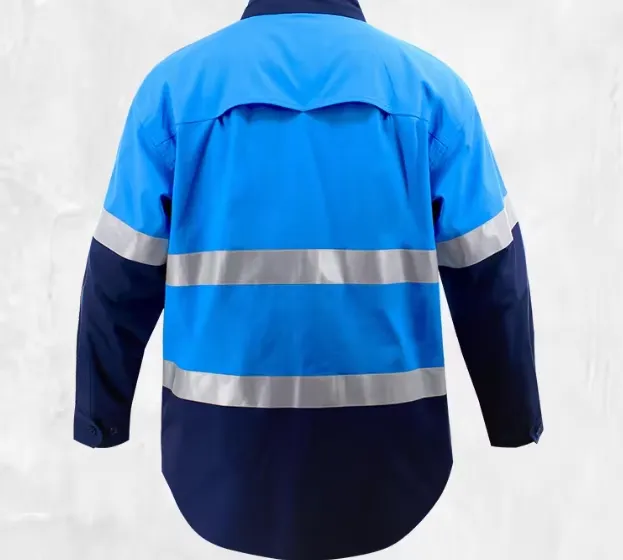
OSHA Standards and the Role of Protective Clothing in Plant Safety
OSHA's General Duty Clause (Section 5(a)(1)) requires employers to provide workplaces free from recognized hazards. For manufacturing plants, this translates into enforceable requirements through specific standards. OSHA 1910.132 mandates that employers conduct workplace hazard assessments and provide appropriate personal protective equipment, including protective clothing, at no cost to employees. OSHA 1910.269 for electric power generation applies to plants with high-voltage equipment, requiring arc-rated clothing with minimum ATPV (Arc Thermal Performance Value) ratings calculated from the facility's arc flash analysis.
Non-compliance carries measurable costs beyond citations. An OSHA serious violation fine ranges from 1,190 to 16,131 per incident as of 2024, but the indirect costs—production downtime during investigations, increased insurance premiums, and worker compensation claims—typically multiply direct penalties by four to six times. Plants implementing comprehensive industrial workwear programs with documented hazard assessments and annual PPE training sessions reduce OSHA recordable injury rates by an average of 26%, according to a National Safety Council analysis of manufacturing sector injury data from 2019–2023.
A Metal Fabrication Plant's Transition to ANSI-Compliant Industrial Workwear
A mid-sized metal fabrication facility in the Midwest operated for years with a loose dress code: employees wore personal jeans and cotton t-shirts, supplemented by company-provided welding aprons at individual workstations. Over a 24-month period, the plant recorded seventeen cut-related injuries requiring medical attention, including three involving tendon damage that resulted in permanent partial disability. The root cause analysis revealed that 82% of injuries occurred during material handling between workstations—moments when workers had removed their aprons.
The plant's management transitioned to a full industrial workwear program specifying ANSI/ISEA 105 Level A4 cut-resistant sleeves and high-visibility ANSI/ISEA 107 Class 2 long-sleeve shirts as mandatory daily wear. The sleeves stayed on the workers throughout their shifts because they were comfortable enough for constant wear—a HPPE-nylon-spandex blend weighing only 180 GSM. In the twelve months following implementation, cut-related injuries dropped to two minor incidents, neither requiring sutures. The per-worker program cost of approximately 85 annually returned an estimated 14,000 in avoided medical and compensation expenses per prevented moderate-to-severe injury.
Operational Efficiency Gains Through Standardized Work Clothing
Why Uniforms Reduce Contamination Risk in Precision Manufacturing
Precision manufacturing environments—CNC machining, electronics assembly, pharmaceutical production—face a threat invisible to the casual eye: particulate contamination from worker clothing. Personal cotton garments shed approximately 10,000–50,000 fibers per minute of moderate physical activity, according to textile emission studies conducted by cleanroom certification bodies. In a CNC shop machining aerospace components with 0.005-inch tolerances, a single cotton fiber settling on a calibrated fixture can cause dimensional deviation exceeding the tolerance band.
ESD-safe industrial workwear addresses a parallel contamination channel: electrostatic discharge. Polyester-blend workwear with embedded carbon fiber grids dissipates static charges through a controlled path to ground, maintaining surface resistivity between 10⁵ and 10¹¹ ohms per square as specified by ANSI/ESD S20.20. For electronics assembly lines handling MOSFET transistors and integrated circuits sensitive to voltages as low as 30 volts, ESD-safe uniforms prevent latent component damage that passes initial quality testing but fails within the first 90 days of field operation.
The Impact of High-Visibility Workwear on Warehouse and Loading Dock Safety
Forklift-pedestrian collisions represent one of the deadliest categories of manufacturing floor accidents. OSHA estimates that forklift-related incidents cause approximately 85 fatalities and 34,900 serious injuries annually across all U.S. industries, with manufacturing and warehousing accounting for 42% of these events. High-visibility industrial workwear compliant with ANSI/ISEA 107 Class 2 requirements—featuring 775 square inches of background fluorescent material and 201 square inches of retroreflective tape—makes a worker visible from 1,280 feet under vehicle headlights, giving forklift operators approximately eight seconds of reaction time at typical warehouse speeds of 8 mph.
A food processing plant in the southeastern United States serving cold-chain logistics implemented mandatory ANSI Class 2 hi-vis uniform jackets for all freezer-aisle pickers after two pedestrian forklift incidents in one quarter. Freezer environments pose an additional visibility challenge because frost accumulation on forklift windshields reduces operator visibility by approximately 30%. The fluorescent orange jackets with retroreflective chest and shoulder bands generated zero pedestrian incidents over the subsequent eighteen months, and the procurement team noted an unexpected secondary benefit: picking accuracy improved by 4.2% because forklift operators could visually confirm picker locations and coordinate movements without radio communication delays.
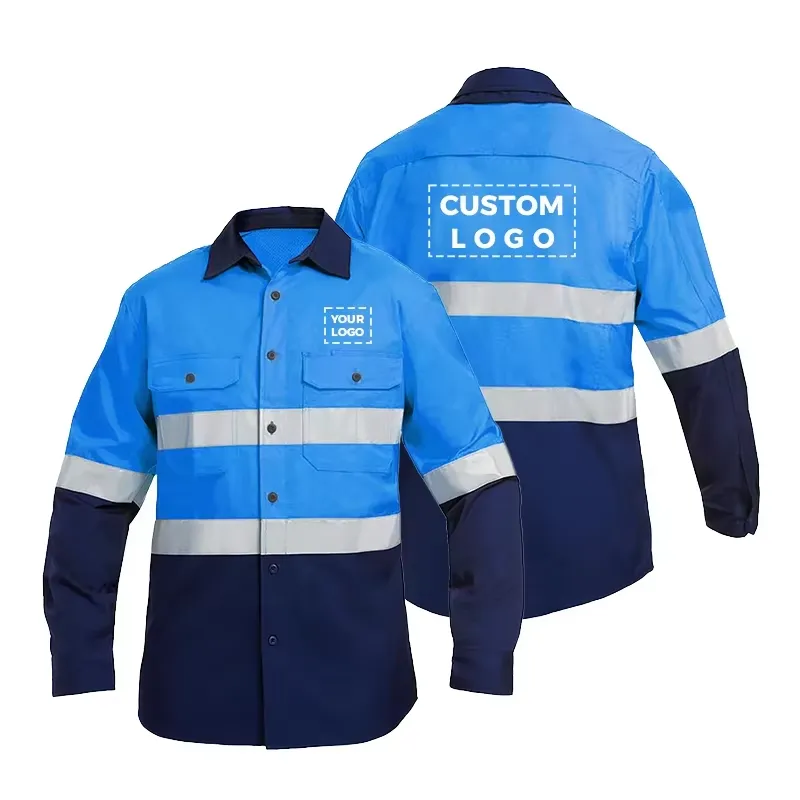
Brand Cohesion and Workforce Psychology in Manufacturing Environments
How Industrial Workwear Contributes to Team Identity and Retention
The psychological dimension of uniforms operates through two mechanisms: deindividuation and social identity reinforcement. Research in organizational psychology identifies that standardized work clothing reduces individual status markers while strengthening group affiliation. For a manufacturing plant with 130-plus workers operating across three shifts, branded industrial workwear creates visual continuity that bridges shift changes—the morning crew seeing the afternoon crew in identical uniforms reinforces the perception of a unified production team rather than fragmented shift-based silos.
Manufacturing turnover rates average 33–39% annually according to Bureau of Labor Statistics data, with replacement costs ranging from 3,500 for entry-level positions to 25,000 for skilled technicians. Plants providing quality uniforms as part of a comprehensive onboarding package report modest but measurable retention improvements. The mechanism appears rooted in perceived organizational support—when a company invests in comfortable, well-fitting, task-appropriate work clothing, workers interpret the expenditure as a signal of organizational commitment to employee wellbeing. A 2023 manufacturing workforce survey by an industrial staffing consultancy found that plants with formal uniform programs reported 11% lower voluntary turnover compared to plants without, controlling for wage levels and shift structure.
Frequently Asked Questions
What is the difference between ANSI and OSHA requirements for industrial workwear?
OSHA establishes legally enforceable workplace safety regulations through specific standards and the General Duty Clause. ANSI develops voluntary consensus standards that define technical performance specifications—such as ANSI/ISEA 107 for high-visibility clothing and ANSI/ISEA 105 for cut resistance. OSHA often incorporates ANSI standards by reference, making them de facto mandatory through the enforcement process.
How often should industrial workwear be replaced?
Replacement cycles depend on hazard exposure and fabric type. High-visibility garments require replacement when the fluorescent background material fades below ANSI chromaticity requirements—typically after 6–12 months of daily use and 50–75 industrial wash cycles. Cut-resistant sleeves last approximately 3–6 months under regular sheet metal handling. Inspection programs should evaluate uniforms monthly for damage, contamination, and loss of protective properties.
Can industrial workwear be customized with company logos?
Yes, provided the customization method does not compromise protective properties. Embroidery on flame-resistant garments must use inherently FR thread. Reflective tape placement on high-visibility garments must maintain the minimum surface area requirements specified by ANSI/ISEA 107. Screen printing on arc-rated garments requires testing the printed area for arc flash performance if the print covers more than 15% of the garment surface.
Does industrial workwear require special laundering procedures?
Flame-resistant workwear requires specific laundry protocols: liquid detergents only (powder detergents leave residue that masks FR properties), no fabric softeners, wash temperature below 140°F, and separate washing from non-FR garments. Industrial laundering services following NFPA 2113 guidelines provide documented wash-cycle tracking for regulatory compliance.
What fabric is best for hot manufacturing environments?
Lightweight cotton-polyester blends at 150–180 GSM with moisture-wicking treatment work best for hot environments. Modacrylic-cotton blends provide inherent flame resistance without the weight penalty of treated cotton FR fabrics. Ventilated mesh panels under the arms and across the back improve airflow by approximately 30% compared to solid fabric construction.
How can a plant manager convince leadership to invest in an industrial workwear program?
Present the cost analysis in terms of OSHA recordable injury reduction targets rather than garment cost. A plant with twenty annual recordable injuries at an average direct cost of 8,500 per incident faces 170,000 in annual injury costs. Documented uniform programs reduce injuries by approximately 26%, yielding a projected annual savings of 44,200 against a program cost that rarely exceeds 85 per worker.