 ×
×
A practical guide to choosing hi-vis safety apparel for construction, logistics, roadwork and outdoor jobs. Covers real use cases, key features, and compliance basics.
When it comes to workplace safety, hard hats and boots usually get most of the attention. Hi-vis clothing often gets treated as something “standard”—just grab a vest and that’s it.
But in real projects, it doesn’t really work like that.
Different jobs have very different conditions. What works on a construction site may feel completely wrong in a warehouse or roadside job.
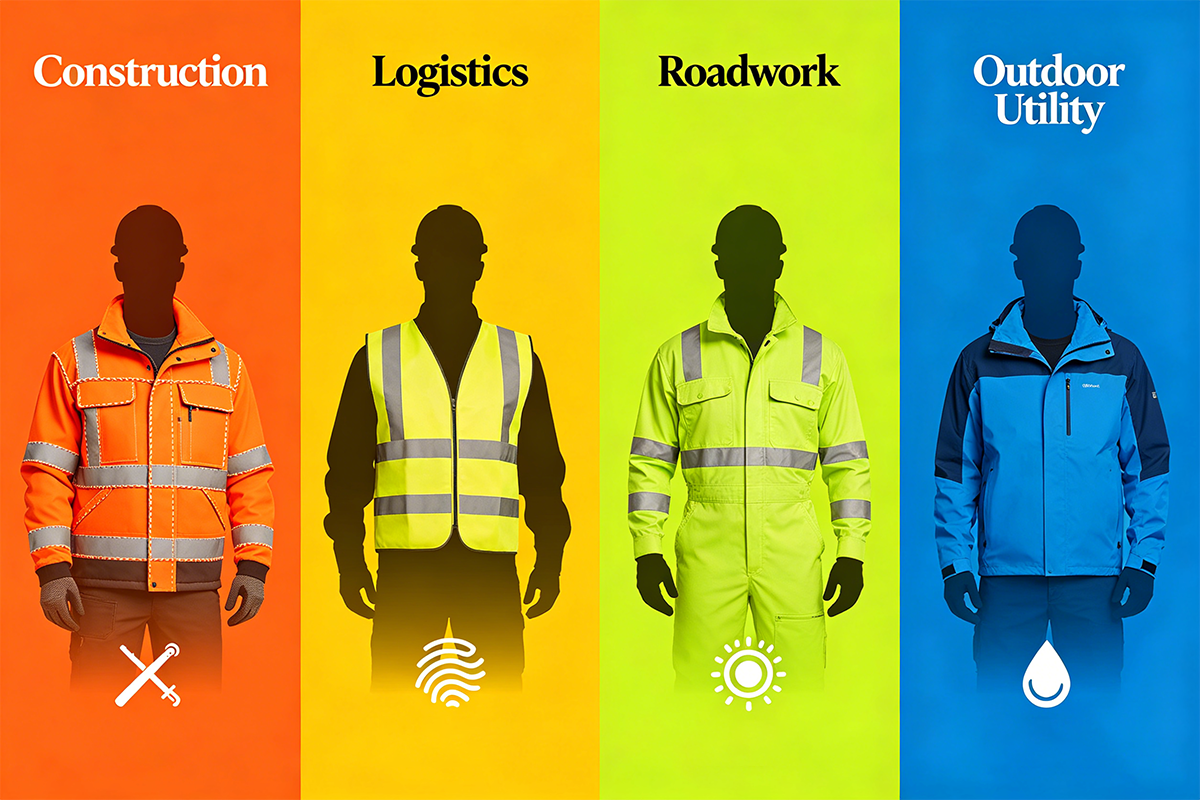
Construction sites: gear needs to survive the job
On construction sites, the problem is not just visibility. It’s everything around it—dust, friction, steel structures, constant movement.
Workers are not standing still. They climb, bend, carry tools all day.
So the clothing usually gets destroyed faster than expected.
That’s why construction-grade hi-vis wear usually comes with things like:
If the fabric fades or reflective strips start cracking, the garment basically stops doing its job.
Warehouses and logistics: comfort matters more than people think
In warehouses, things are different.
There’s no harsh weather, no heavy dust in most cases. But people move non-stop for hours.
Forklifts, loading, scanning, walking—repeat for the whole shift.
If the uniform is heavy or too warm, workers slow down without even noticing.
That’s why many companies move toward lighter options like:
It sounds simple, but comfort directly affects how focused someone stays during long shifts.
Road and traffic work: visibility is everything
This is probably the most demanding scenario.
Road crews are working next to moving traffic, often at high speed. Even a small visibility issue can be dangerous.
Here, there’s not much room for compromise.
Most setups rely on:
At night or early morning, the goal is simple: drivers should recognize a human shape instantly, not “something reflective on the road”.
Outdoor utilities: weather becomes part of the problem
Utility and maintenance workers deal with something else—weather.
Rain, wind, cold mornings, long outdoor hours. Visibility is still important, but protection becomes equally critical.
So hi-vis jackets for these jobs are usually more “all-in-one”:
The idea is not to layer multiple clothes, but to keep one system that works all day.
Standards are not just paperwork
A lot of buyers only look at color or style at first.
But in real procurement, standards matter a lot.
Depending on where the products are used, you’ll usually see:
These are not just labels. In some projects, compliance decides whether the product can even be used onsite.
Custom branding is now common
Hi-vis clothing is no longer just “safety uniform”.
Many companies now use it as part of their brand identity.
So you’ll see things like:
It’s a small detail, but in large teams, it makes the operation look more organized and consistent.
Final thought

 EN
EN


