
 EN
EN



What "Free Design Drafts" Actually Mean in the Uniform Supply Industry
A European retail chain with 340 stores across six countries needed new staff uniforms. The procurement team contacted eight custom uniform supplier candidates through industry trade platforms. Six of the eight offered "free design drafts." The procurement manager—experienced in sourcing raw materials but new to garment procurement—interpreted this as a standard industry practice with uniform deliverables. The reality proved more nuanced: the six free drafts ranged from a two-minute pencil sketch on a napkin-quality scan to a detailed CAD rendering with fabric weight specifications and stitch construction notes. Only two of the six could be taken directly to the sampling stage without additional design work.
The Distinction Between Concept Sketches and Production-Ready Tech Packs
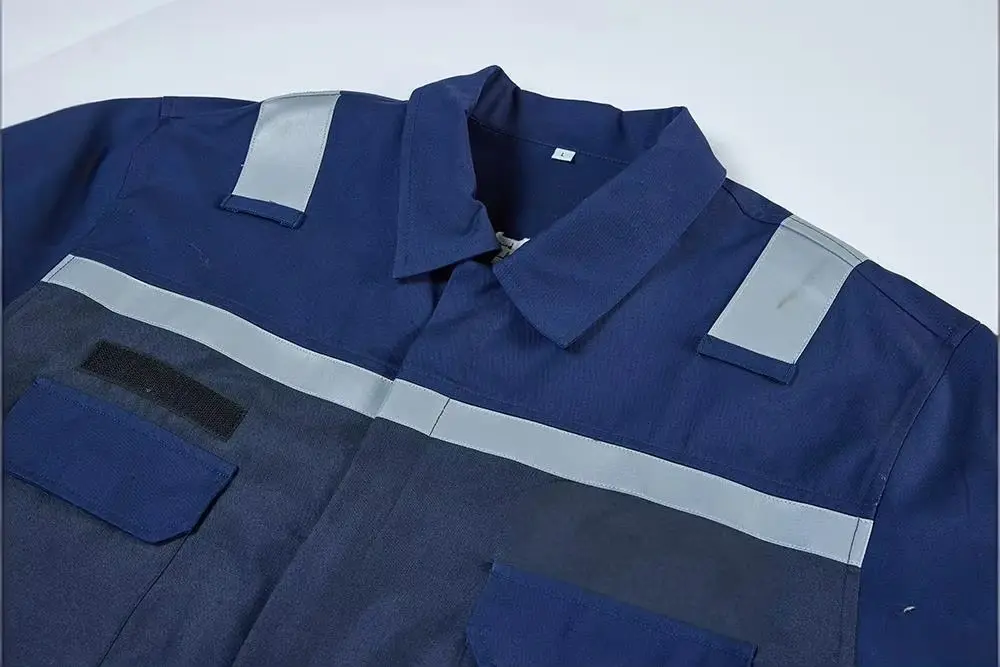
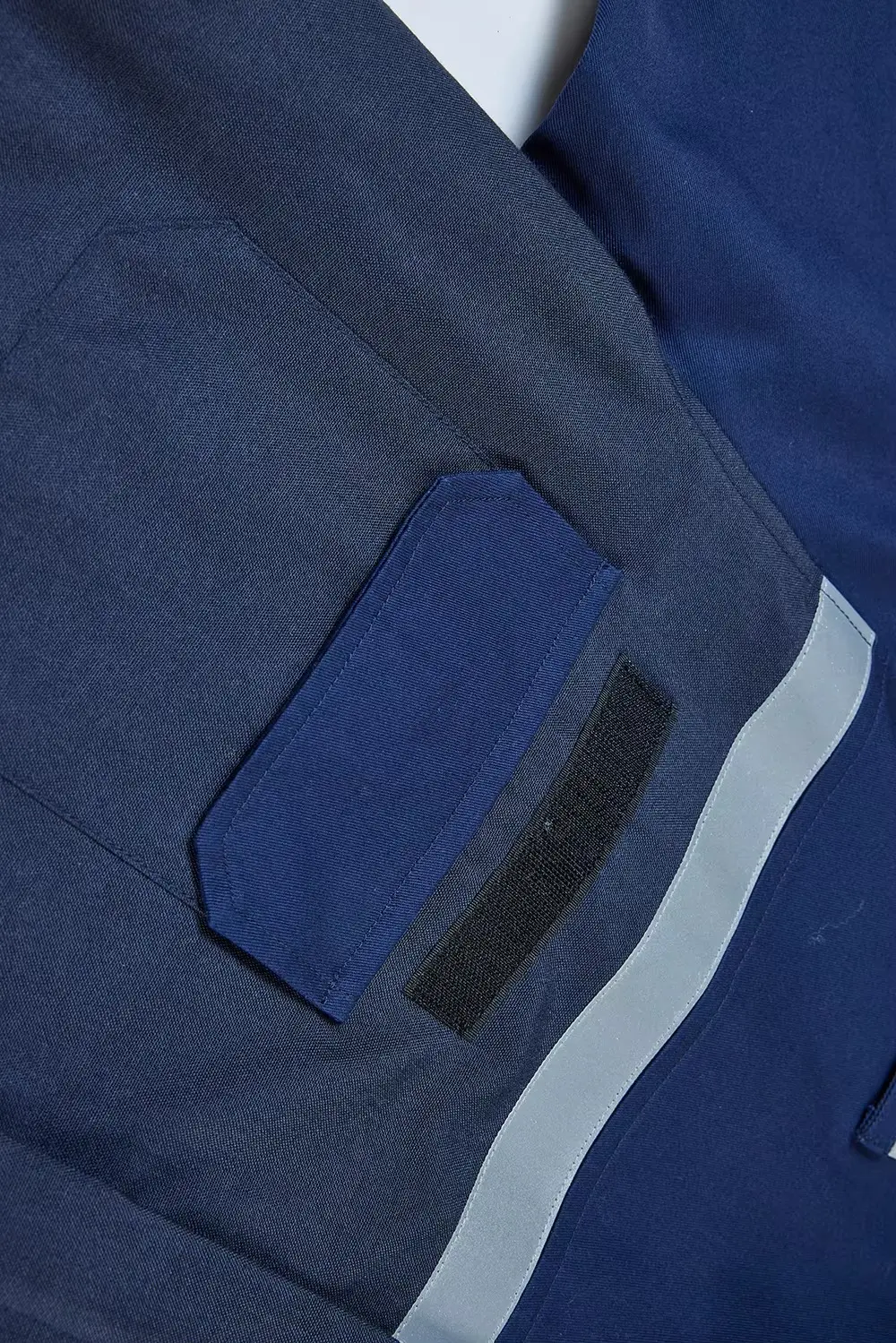
A concept sketch visualizes the garment silhouette, color blocking, and logo placement. It communicates aesthetic direction but contains zero production information. A tech pack—short for technical packet—provides the complete engineering document that a factory's pattern maker uses to create physical samples. A production-ready tech pack from a custom uniform supplier should include: front and back flat sketches with proportional measurements, fabric composition by weight and weave type, stitch types specified by ISO 4915 classification numbers, seam allowance values (typically 1cm for main seams, 0.6cm for topstitching), placement coordinates for logos and reflective elements, and a size specification table with tolerance ranges for each measurement point.
The gap between a concept sketch and a tech pack represents hours of specialized labor. A professional tech pack for a single garment style—say, a work jacket with five pockets and reflective trim—requires six to twelve hours of work from a technical designer familiar with garment construction and production feasibility. When a custom uniform supplier offers a "free design draft" that turns out to be only a concept sketch, the buyer must either invest internal resources to develop the tech pack or negotiate a separate design contract—often at 150–400 per garment style depending on complexity.
How Custom Uniform Suppliers Structure Design Consultation as a Pre-Order Service
Design consultation as a pre-order service follows a practical business logic. A supplier investing six hours of designer time to create a production-ready tech pack demonstrates commitment to the project and expects this investment to convert into a production order. The industry norm operates on an implicit understanding: thorough design consultation comes at no upfront charge with the expectation of order placement, while standalone design deliverables—tech packs intended for competitive bidding—carry a separate fee.
The most structured custom uniform supplier workflows follow a milestone approach. Stage one provides a free concept sketch after an initial consultation call covering fabric preferences, functional requirements, and brand guidelines. Stage two—if the buyer confirms interest—delivers a detailed tech pack with fabric swatch recommendations. Stage three produces the pre-production sample at cost, typically 50–120 per sample for complex garments. The sample cost is often credited against the bulk order if the buyer proceeds, so the net sample cost becomes zero for converting customers. This milestone structure allows both parties to evaluate the relationship incrementally without either side carrying disproportionate risk.
A Retail Chain's Experience Navigating Free Design Drafts for Staff Uniforms
The 340-store retail chain's experience illustrates the practical workflow. After reviewing eight initial concept sketches from different suppliers, the team narrowed the field to three candidates. Two suppliers submitted sketches within 24 hours but lacked detail on fabric weight (listed only as "polyester") and made no mention of seam construction. The third custom uniform supplier—a Shenzhen-based manufacturer with 13 years of OEM workwear experience and 130 skilled workers across 12 production lines—delivered a concept sketch within 48 hours that specified 220 GSM polyester-cotton twill, bartack reinforcement at all pocket corners, and stitch-per-inch density targets.
The retail team requested tech packs from all three finalists. Two suppliers quoted 250–380 for full tech pack development. The third supplier provided the tech pack at no charge, explicitly communicating that the investment was made with the understanding that their factory would receive the production order. The tech pack included ISO 4915 stitch classification codes for each seam type, a graded size chart covering XS through 4XL with 14 measurement points per size, and fabric mill certificates for the recommended 220 GSM twill. The retail team placed their order with this supplier, and the tech pack became the binding reference document that both parties used for quality control inspection during production and pre-shipment sampling.
The Real Costs Hidden Behind "Free" Design Services
Why Some Suppliers Bundle Design Costs Into Per-Unit Pricing
Design work costs real money. A technical designer in a garment manufacturing hub earns a monthly salary, and the six to twelve hours spent on a single tech pack represent a direct cost that the supplier must recover. The recovery mechanism usually involves spreading the design cost across the production order's per-unit price. For an order of 2,000 uniforms, a design cost of 250 adds 0.125 per unit—barely noticeable. For an order of 200 uniforms, the same design cost adds $1.25 per unit, a significant increase in percentage terms.
Procurement teams should understand this arithmetic when comparing quotes. A custom uniform supplier offering "free design drafts" on a 200-piece order may quote 18.50 per jacket while a supplier charging a separate 250 design fee quotes 17.00 per jacket. The total cost—3,700 versus $3,650—nearly equalizes, and the supplier charging separately for design may produce a more thorough tech pack because their design team's compensation does not depend on production volume. Transparent pricing models where design and production appear as separate line items allow procurement teams to evaluate each component on its own merits.
How to Evaluate Whether a Design Draft Is Production-Viable
Three technical checks separate production-viable design drafts from presentation sketches. First, check seam construction notations. A viable draft specifies seam type codes: superimposed seam (ISO 4915 class 1), lapped seam (class 2), bound seam (class 3), or flat seam (class 4). A draft that simply says "stitching" without specification indicates the designer has not considered production engineering.
Second, verify fabric specifications beyond the generic name. "Polyester" could mean 75D filament polyester at 110 GSM suitable for lining or 600D Oxford polyester at 300 GSM suitable for heavy-duty work bags. A production-viable draft from a custom uniform supplier names the yarn count (denier or tex), weave structure (plain, twill, Oxford, ripstop), and finished weight in GSM. Third, check whether the draft includes a bill of materials listing every trim component: zipper type and brand, button size and material, thread color code, interlining specification, and label construction. A draft missing any of these components will require additional design work before sampling can begin.
What a Professional Design-to-Production Workflow Should Include
From Tech Pack to Pre-Production Sample — Critical Steps That Prevent Errors
The tech pack initiates the sampling phase, but additional verification steps prevent costly production errors. The pre-production sample—sewn by the factory's pattern room using the actual production fabric and trims—serves as the physical reference for fit, construction quality, and design accuracy. The sample should arrive with a sample inspection report listing each measurement point's target and actual values, deviations highlighted in red, and photographs of any construction issues.
A second-round sample often proves necessary for complex custom uniform supplier projects. First-round samples commonly reveal issues invisible in digital renders: sleeve pitch angles that restrict arm movement, pocket positions that shift when the garment is worn rather than lying flat, collar roll that differs from the flat sketch because fabric drape changes the geometry. Investing in a second sample round adds approximately 7–10 days to the pre-production timeline but prevents errors that would affect every piece in the production run.
How to Protect Your Brand's Design Intellectual Property During Supplier Negotiation
Design files shared with suppliers contain brand intellectual property: logo vector files, color Pantone specifications, and unique garment construction details. A non-disclosure agreement (NDA) provides the first layer of protection, but practical safeguards extend further. Watermark all design files with the supplier's name and date before sharing. Provide logo files in low resolution (72 dpi) sufficient for placement visualization but unsuitable for unauthorized production. Supply Pantone codes only for the specific colors needed rather than the entire brand color palette.
The most effective protection involves working with a custom uniform supplier that can demonstrate a documented intellectual property handling policy. A manufacturer that has passed supply chain audits for technology companies and automotive brands typically operates under IP protection protocols that include segregated client file storage, designer-level access restrictions, and documented file destruction procedures upon project completion or cancellation. These operational safeguards matter more than the legal language in an NDA because they prevent accidental rather than malicious IP exposure.
Frequently Asked Questions
Do all custom uniform suppliers charge for design drafts?
Some suppliers provide free concept sketches as a pre-sales courtesy and charge for production-ready tech packs, while others bundle design costs into per-unit pricing. The deliverable quality varies dramatically. A free 24-hour sketch should not be expected to serve as a production document. Production-ready tech packs typically cost 150–400 per style when priced separately.
What should a tech pack include for a custom uniform order?
A complete tech pack includes front and back flat sketches with measurements, fabric specifications by GSM and weave type, ISO 4915 stitch classification codes for each seam, seam allowance values, logo and trim placement coordinates, a graded size chart with tolerance ranges, a bill of materials for all trims, and construction sequence notes.
How long does the design-to-sample process take?
The full process typically spans 14–21 days: 2–3 days for concept sketches, 5–7 days for tech pack development, 7–10 days for the first pre-production sample, and an additional 7–10 days for second-round sampling if needed. Complex garments with multiple custom trims may extend to 5–6 weeks.
Can a uniform supplier work from a hand sketch?
Most professional uniform suppliers accept hand sketches as a starting point, provided the sketch includes proportional garment measurements, design detail notes, and color references. The supplier's technical designer converts the hand sketch into a CAD tech pack, adding construction specifications that the hand sketch cannot convey.
What happens if the pre-production sample does not match the design draft?
A documented sample inspection process identifies deviations from the tech pack. Minor deviations—pocket placement off by 3mm, thread color slightly different—may be accepted with written confirmation. Major deviations—wrong fabric, incorrect construction—trigger a revised sample at the supplier's expense. The tech pack serves as the binding reference document throughout this process.
How can buyers protect their uniform designs from being copied?
Watermark design files, share low-resolution logo files, provide only necessary Pantone codes, and verify the supplier's IP protection infrastructure. Suppliers with technology industry audit experience typically operate under documented IP handling protocols. An NDA provides legal protection, but operational safeguards prevent practical IP exposure during daily supplier interactions.