
 EN
EN



Why Standard Fabrics Fail Under Daily Delivery Riding Conditions
A meal delivery fleet operating 120 riders across three Southeast Asian cities tracked uniform replacement costs over eighteen months. The riders, each covering 80–120 kilometers daily on motorcycles in 30–35°C heat and monsoon-season rain, went through polyester-cotton uniform shirts every four to five weeks. Seam failures at the shoulder and underarm, fabric thinning at the lower back from constant friction against the seat, and color fading from UV exposure and daily laundering drove per-rider annual uniform costs to approximately $210. This spending pattern reveals a structural mismatch between standard workwear fabrics and the specific demands of delivery riding.
The Unique Wear Patterns That Destroy Regular Uniforms on Motorcycles and E-Bikes
Delivery riding subjects uniforms to three simultaneous stress vectors that stationary or walking workers never experience. First, constant seated posture with forward-leaning torso position stretches the shoulder yoke and upper back fabric across the widest point of the rider's frame, concentrating tension along the shoulder seam attachments. Second, micro-abrasion from the rider's body shifting against the motorcycle seat during acceleration, braking, and cornering grinds the seat-area fabric against a textured surface at 30–60 micro-movements per minute. Third, wind shear at riding speeds of 40–60 km/h creates fabric flutter at loose edges—collar points, cuff openings, and hem lines—generating fatigue stress that eventually causes thread breakage at stitch points.
Standard uniform fabrics fail because they address none of these specific mechanisms. A generic 180 GSM polycotton poplin shirt designed for retail counter staff provides adequate comfort for standing and walking but loses structural integrity within 15–20 riding shifts. The cotton component absorbs perspiration and road moisture, weakening hydrogen bonds between cellulose fibers and reducing tensile strength by approximately 30–50% when wet. A delivery uniform operates in conditions closer to technical sportswear than conventional workwear, demanding fabrics engineered for dynamic, high-movement, weather-exposed use.
How a Food Delivery Fleet Reduced Uniform Replacement Costs by Switching Fabrics
The Southeast Asian delivery fleet's procurement team conducted a three-month fabric trial with 24 riders. Twelve riders received standard 65/35 polyester-cotton poplin shirts as a control group. Twelve riders received shirts constructed from 160 GSM mechanical-stretch ripstop polyester with a DWR (Durable Water Repellent) finish. The test protocol tracked garment retirement reasons—seam failure, fabric tearing, color fading beyond brand standards, and rider-reported comfort issues—while standardizing the laundering schedule to daily machine wash at 40°C.
After 90 days, the control group averaged 2.1 uniform replacements per rider. The ripstop polyester test group averaged 0.4 replacements. The ripstop fabric's crosshatch weave pattern—a grid of heavier reinforcement yarns woven at 5–8mm intervals—functioned as a built-in tear-stop mechanism. When a snag or abrasion created a small hole, the reinforcement grid prevented the tear from propagating beyond the next grid intersection, limiting damage to approximately 5mm before the rip stopped. This property alone accounted for 73% of the durability difference between the two fabric types. The procurement team transitioned the full 120-rider fleet to ripstop polyester delivery uniform shirts, reducing annual per-rider uniform costs from 210 to approximately 68—a 68% cost reduction achieved entirely through fabric selection.
Understanding Fabric Weight, Weave Structure, and Abrasion Resistance
Fabric weight measured in GSM (grams per square meter) provides a starting point for durability assessment but does not tell the complete story. A 220 GSM twill weave polyester-cotton can offer lower abrasion resistance than a 160 GSM ripstop nylon because weave structure distributes friction differently. In a plain weave, warp and weft yarns interlace in a simple one-over-one-under pattern that exposes each yarn crossing to surface wear equally. In a twill weave, the diagonal rib structure concentrates surface contact on approximately 30% of yarn surface area, protecting the remaining 70% beneath the diagonal floats. This structural advantage explains why a delivery uniform in 220 GSM twill outlasts a 220 GSM plain-weave equivalent by a factor of 1.8 to 2.2 times under identical abrasion testing per ISO 12947-2.
Abrasion resistance numbers measured by the Martindale test provide objective comparison metrics. General workwear fabrics rate 20,000–50,000 Martindale cycles before visible wear. Technical nylon fabrics engineered for motorcycle riding gear achieve 100,000+ cycles. For delivery applications, a fabric should exceed 50,000 Martindale cycles to deliver acceptable service life under daily riding conditions. Procurement teams should request Martindale test certificates formatted per ISO 12947-2 and compare results across fabric candidates before selecting final materials.
Top Fabric Choices for All-Weather Delivery Uniform Performance
Ripstop Nylon and Polyester — Lightweight Durability for Warm Climates
Ripstop nylon at 140–180 GSM offers the highest strength-to-weight ratio among practical uniform fabrics. Nylon 6,6 fiber provides tensile strength of approximately 700–800 MPa, roughly 40% higher than polyester at equivalent denier. The ripstop reinforcement grid woven at 5–8mm spacing doubles the tear strength at grid intersections, creating a fabric that weighs less than a cotton t-shirt but resists tearing better than 350 GSM canvas. For delivery fleets operating in tropical and subtropical climates where heat stress represents a safety concern, lightweight ripstop nylon delivery uniform shirts allow sweat evaporation while providing structural durability.
The cost premium for ripstop nylon runs approximately 25–40% above standard polycotton workwear fabric, translating to 3–$6 additional per shirt at wholesale production pricing. The procurement calculation should weigh this against replacement frequency. A ripstop nylon shirt lasting eight months at 14 unit cost generates an effective monthly cost of 1.75. A polycotton poplin shirt lasting five weeks at 9 unit cost generates an effective monthly cost of $7.80. The more expensive fabric produces a 78% lower monthly cost due to extended service life.
Polyester-Cotton Twill — Balanced Comfort and Toughness for Year-Round Use
Polyester-cotton twill in 220–260 GSM balances the comfort expectations of riders accustomed to cotton garments with the durability requirements of delivery work. The twill weave structure—identified by its diagonal rib pattern—offers approximately 40% higher abrasion resistance than plain weave at equivalent fabric weight. The polyester component, typically 65% of the blend, provides quick-dry performance and wrinkle resistance. The cotton component, at 35%, absorbs body moisture during the initial 10–15 minutes of a shift before the polyester's wicking action pulls moisture to the fabric surface for evaporation.
This blend works best for delivery uniform programs serving temperate climate zones where riders encounter both warm summer afternoons and cool autumn mornings. The fabric weight at 220–260 GSM provides enough thermal mass to retain body heat during early-morning starts while remaining breathable enough for midday deliveries. Procurement teams should specify pre-shrunk, sanforized twill—not simply mechanically compacted fabric—to maintain dimensional stability below 1% residual shrinkage through the garment's service life.
Moisture-Wicking and Breathable Fabrics for High-Intensity Urban Delivery Routes
Urban delivery routes with frequent stops—averaging 15–25 deliveries per shift with mounting and dismounting every 8–12 minutes—generate high perspiration rates that standard fabrics handle poorly. Moisture-wicking fabrics address this through capillary action: polyester fibers engineered with modified cross-sectional shapes (trilobal, tetra-channel, or hollow-core) create microscopic channels that draw liquid sweat away from the skin and spread it across the fabric surface for rapid evaporation. The wicking rate, measured in vertical wicking height per minute per AATCC TM 197, should exceed 100mm after 10 minutes for effective rider comfort.
A delivery uniform incorporating mesh ventilation panels on the back yoke, underarm gussets, and side panels improves airflow by approximately 35–45% compared to solid fabric construction. Laser-cut perforations in a grid pattern provide ventilation without the fraying risk of traditional cut-and-sew mesh panels. For high-humidity coastal delivery zones where evaporative cooling becomes inefficient, the ventilation structure matters more than the wicking chemistry because mechanical airflow assists evaporation when ambient humidity saturates the boundary layer above the skin.
Fabric Features That Separate Professional Delivery Uniforms from Generic Workwear
Why Water-Repellent Finishes and UV Protection Matter for Outdoor Riders
Delivery riders operate in weather that office workers avoid. A DWR (Durable Water Repellent) finish applies a fluoropolymer or silicone-based treatment that lowers the fabric's surface energy, causing water to bead and roll off rather than saturate the fibers. DWR effectiveness degrades with laundering—typically retaining 80% performance after 20 washes and 50% after 50 washes when heat-reactivated in a tumble dryer. For delivery uniform programs, specifying a C0 DWR (fluorocarbon-free, meeting emerging EU regulations under REACH) provides water repellency without environmental persistence concerns.
UV protection becomes relevant for riders spending six to ten hours daily in direct sunlight. Fabrics with a UPF (Ultraviolet Protection Factor) rating of 30+ block at least 97% of UV radiation. Polyester inherently provides higher UV protection than cotton because polyester's molecular structure absorbs UV-B radiation more effectively. Dark-colored fabrics offer approximately 30–50% higher UPF than light-colored equivalents due to greater UV absorption by dye molecules. A delivery uniform in navy or charcoal ripstop polyester with UPF 30+ rating protects riders from cumulative UV exposure while maintaining professional appearance.
Reinforced Seating Areas and Stretch Panels for All-Day Riding Comfort
The seat area of a delivery uniform endures the highest mechanical stress of any garment zone—compression between rider and seat, shear from body movement, and abrasion from seat texture. A double-layer seat panel using the same face fabric as the main garment body, quilted with a thin 40 GSM polyester interlining, distributes compression force across twice the fabric surface area and delays the point at which seat-area fabric thinning becomes visible.
Mechanical-stretch fabrics incorporating 2–5% elastane or spandex provide 15–30% elongation in the warp direction, accommodating the forward-leaning riding posture without restricting shoulder and upper back movement. The stretch mechanism differs from knitted fabric stretch: woven mechanical-stretch fabrics return to their original dimensions after extension, maintaining garment shape through repeated wear cycles. For delivery uniform jackets, articulated sleeves with a pre-curved elbow shape and underarm gussets allow full handlebar reach without the jacket riding up the rider's back—a detail that riders notice immediately when switching from generic work jackets to purpose-designed delivery gear.
Frequently Asked Questions
What is the most durable fabric for delivery rider uniforms?
Ripstop nylon at 160–180 GSM with a DWR finish offers the best durability-to-weight ratio. The crosshatch reinforcement grid limits tear propagation to approximately 5mm, and nylon 6,6 fiber provides tensile strength around 700 MPa. Under daily riding conditions, ripstop nylon uniforms typically last six to eight times longer than standard polycotton poplin.
How does ripstop fabric prevent uniform tearing?
Ripstop fabric weaves heavier reinforcement yarns in a grid pattern at 5–8mm intervals throughout the fabric. When a tear begins at a snag or abrasion point, the tear propagates along the weaker yarns until it reaches a reinforcement grid intersection, where the heavier yarn stops the tear from continuing. This limits damage to approximately the size of one grid cell.
Can delivery uniforms be both waterproof and breathable?
Fully waterproof-breathable fabrics using PTFE or PU membranes exist but add 15–25 per garment and reduce airflow. A more practical approach for most delivery fleets combines a DWR-treated ripstop shell with mesh ventilation panels. The DWR finish repels light to moderate rain while ventilation panels maintain airflow for sweat evaporation during dry conditions.
How often should delivery uniforms be washed?
Daily washing after each shift prevents bacterial buildup from accumulated sweat and road grime. Machine wash at 40°C with liquid detergent preserves fabric properties better than powder detergents. Tumble drying on low heat reactivates DWR finishes. Fabric softeners degrade moisture-wicking performance and should be avoided for technical delivery uniform fabrics.
What fabric weight is best for hot climate delivery uniforms?
140–160 GSM ripstop polyester or nylon works best for tropical climates above 28°C. Fabrics below 140 GSM sacrifice durability for marginal weight savings. Moisture-wicking treatment combined with mesh ventilation panels in high-sweat zones provides cooling beyond what fabric weight reduction alone can achieve.
Do reflective elements affect fabric durability?
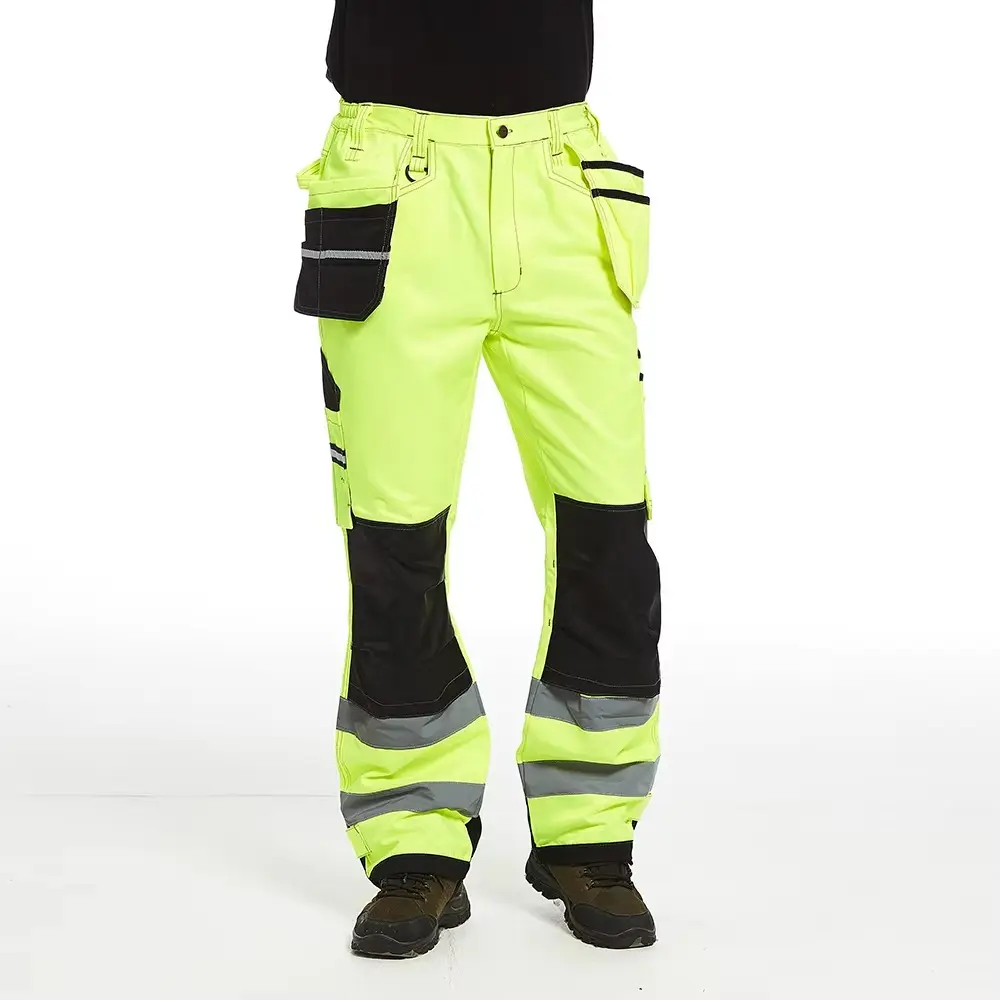
Sewn reflective tape adds a stress concentration point along the stitching line. Heat-transferred reflective film avoids this issue by bonding directly to the fabric surface without needle perforations. For delivery uniforms requiring high-visibility elements, specifying heat-transfer reflective logos rather than sewn tape extends garment life by eliminating the stitch holes that become tear initiation points.