
 EN
EN



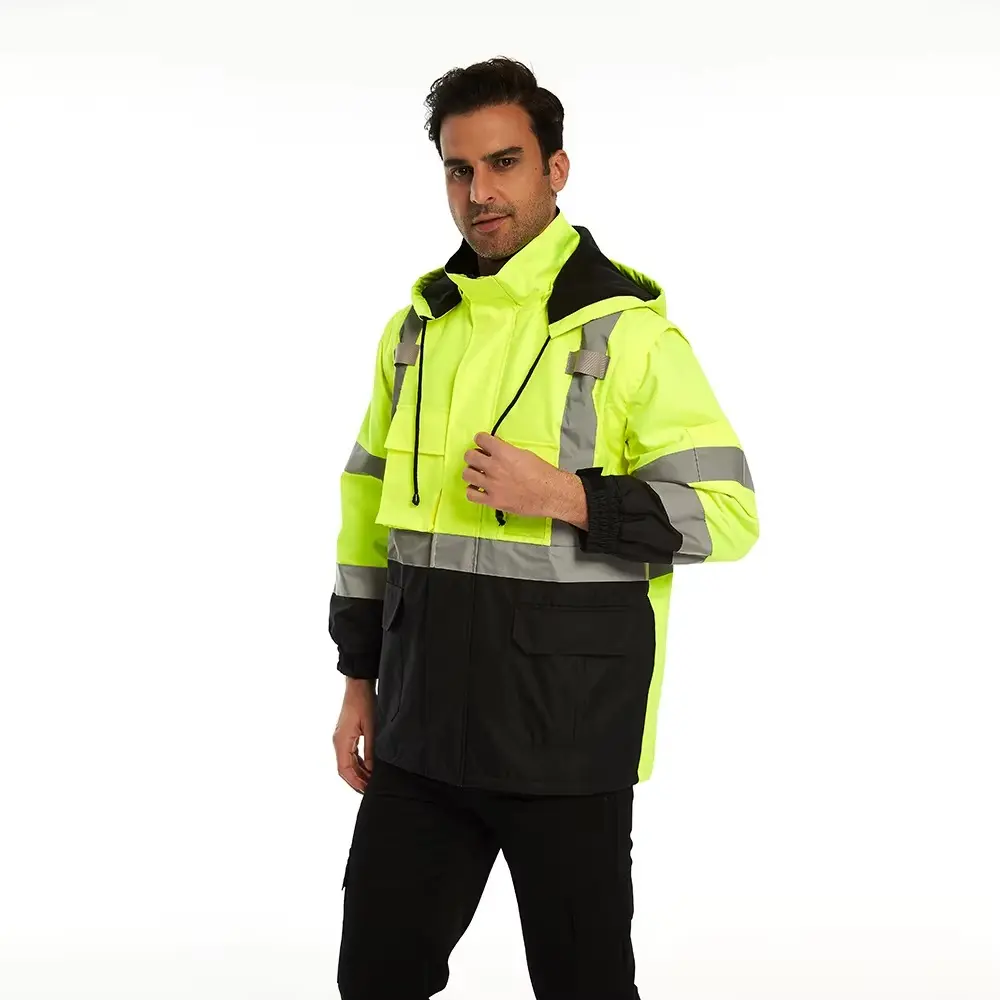
A national logistics company operating 12 distribution centers replaced their existing custom work uniforms — a cotton-rich twill shirt and pant with mechanical stretch panels — with a lower-cost alternative: a 65/35 polyester-cotton poplin shirt and plain-weave pant with no stretch panels, saving 4.80 per uniform set on a 3,200-unit order. Within four weeks, average order-picking speed across all shifts decreased from 68 items per hour to 60 items per hour — a 12% decline. Worker feedback revealed the mechanism: the replacement fabric lacked moisture-wicking properties, causing sweat accumulation that made the shirt cling to workers' backs and restrict arm movement during overhead shelf picking; the absence of mechanical stretch created resistance during squatting and ladder-climbing motions; and the stiffer collar fabric caused neck chafing during 10-hour shifts in 28-32°C warehouse ambient temperatures. The procurement team calculated that the 12% productivity reduction cost approximately 147,000 in additional labor hours over six months — roughly 38 times the $3,840 saved on the uniform purchase.
Keeping custom work uniforms comfortable for all-day wear requires attention to four design elements — fabric, fit, ventilation, and skin-contact details.
The Four Pillars
Fabric is the foundation. A custom work uniforms specification must address thermoregulation and moisture management — the skin produces 0.5-1.5 liters of sweat per shift in moderate indoor work, increasing to 2-4 liters in outdoor or high-exertion roles. A fiber blend of 60-65% polyester (hydrophobic — transports water along the fiber surface through capillary action) and 35-40% cotton (hydrophilic — absorbs water) creates unidirectional moisture transport: the hydrophobic polyester fibers draw sweat away from skin through capillary wicking — the spontaneous movement of liquid through narrow channels driven by surface tension — and spread it across the fabric's outer surface where it evaporates, while the cotton component provides the soft hand-feel that workers prefer against skin. Pure polyester wicks effectively but can feel slick and clammy; pure cotton absorbs up to 25 times its weight in water and holds it against the skin, becoming heavy, cold, and abrasive. The 60/40 or 65/35 blend with a mechanical wicking finish achieves moisture vapor transmission rates of 800-1,200 g/m²/24h, approximately double that of untreated cotton poplin. Performance fibers like Coolmax — a proprietary polyester with a cross-shaped fiber cross-section creating micro-channels for enhanced wicking — provide additional comfort for outdoor or high-exertion roles. Fabric weight matters: 150-180 gsm for climate-controlled indoor, 200-240 gsm for general industrial, above 280 gsm only for cold-weather outdoor.
Fit — specifically articulation — is the second pillar. Three design features address movement: articulated knees and elbows (pre-shaped curved seams matching the joint's natural bend, reducing fabric tension by 40-60% compared to straight seams); a gusseted crotch (a diamond-shaped fabric insert eliminating the four-way seam intersection that binds during squatting — reducing crotch tension by approximately 70% at 90-degree squat); and 4-way stretch panels — spandex/elastane at 2-5% blend ratio — integrated into the back yoke, inner thigh, and side panels, allowing 15-30% elongation in both warp and weft directions with full recovery.
Ventilation — the third pillar — uses mesh fabric panels in high-heat zones: underarm gussets, upper back yokes, and inner thigh panels. Polyester mesh with 2-3mm hole size increases convective heat loss by 20-30% compared to solid fabric per ASTM F1291 thermal manikin testing.
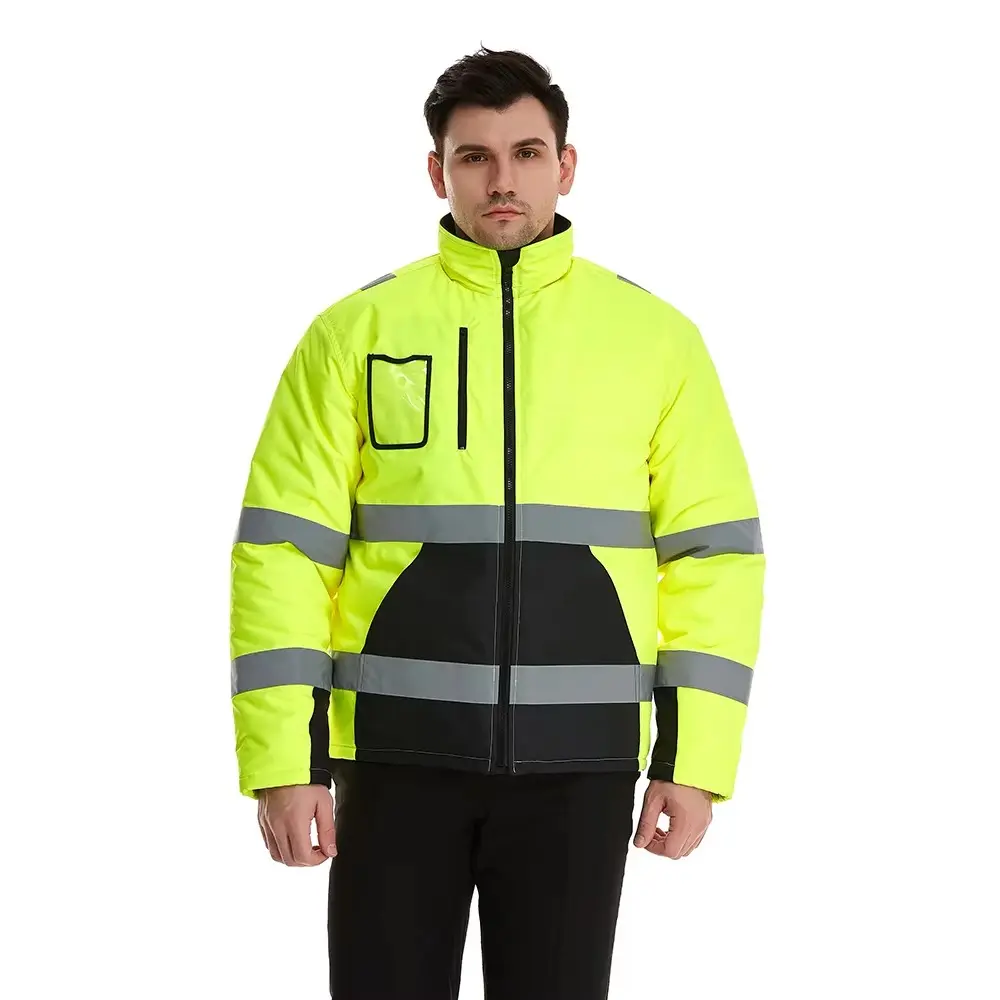
Skin-contact details — the fourth pillar — address small irritations that accumulate over 8-12 hours. Flatlock stitching (fabric edges butted together, no raised ridge) eliminates friction at neck, shoulder, and inner arm. Tagless heat-transfer labels eliminate neck-scratching plastic tags. Covered waistband elastic — encased in fabric rather than exposed — prevents skin indentation and chafing after hours of contact with perspiration-dampened skin.
Industry-Specific Requirements
Construction and outdoor industrial custom work uniforms require all four pillars plus UV protection (UPF 30-50), abrasion-resistant panels at knees and elbows, and compatibility with safety harnesses. Logistics and warehouse uniforms prioritize stretch panels for repetitive lifting and mesh ventilation for non-air-conditioned environments. Hospitality uniforms add appearance retention — wrinkle resistance and colorfastness through 50+ industrial washes. Healthcare uniforms prioritize antimicrobial treatments and fluid-repellent finishes alongside moisture management.
Frequently Asked Questions
What fabric blend is best for all-day comfortable work uniforms?
A 60-65% polyester / 35-40% cotton blend with a mechanical wicking finish provides the optimal balance: the polyester wicks moisture away from skin through capillary action and spreads it for evaporation, while the cotton provides a soft, natural hand-feel. Pure cotton absorbs and holds sweat; pure polyester wicks well but can feel clammy.
How does articulated design improve uniform comfort?
Articulated knees and elbows use pre-curved seams that match the joint's natural bend, reducing fabric tension by 40-60% compared to straight seams. A diamond-shaped gusseted crotch eliminates the binding four-way seam intersection and reduces crotch tension by approximately 70% during a 90-degree squat.
What is the difference between mechanical stretch and spandex stretch?
Mechanical stretch relies on the fabric weave structure to provide 5-10% elongation. Spandex/elastane stretch (2-5% fiber blend) provides 15-30% elongation in both warp and weft directions and recovers without permanent deformation. Spandex-blend panels are recommended for high-movement zones like back yoke and inner thigh.
How does mesh ventilation improve all-day comfort?
Polyester mesh panels (2-3mm hole size) in underarm, upper back, and inner thigh zones increase convective heat loss by 20-30% compared to solid fabric per ASTM F1291 testing. Mesh also reduces garment weight by 15-25% in the panel areas. The mesh must be placed where it does not compromise structural durability.
What skin-contact details reduce uniform irritation during long shifts?
Flatlock stitching eliminates the raised seam ridge — fabric edges are butted together rather than overlapped. Tagless heat-transfer labels eliminate neck-scratching plastic tags. Covered waistband elastic prevents skin indentation and chafing from exposed elastic against perspiration-dampened skin.
How should uniform comfort requirements be specified in a procurement document?
Include: fabric composition (fiber blend percentage), fabric weight (gsm), moisture vapor transmission rate minimum (g/m²/24h), articulation features (articulated knees, gusseted crotch), stretch panel zones and spandex percentage, mesh ventilation zone locations, seam type (flatlock for skin-contact areas), and label type (tagless). Generic "comfortable" is not a measurable specification.